Blog

  • The Point of No Return

    The Point of No Return

    Ed comes around the forward landing gear and sees him, that son of a bitch who almost killed him. His mid-air refueling tanker, a KC-135, is ready to go. As crew chief, he’s finishing his walk-around, checking the tires, examining hydraulic lines for leaks and inspecting the nacelles for cracks – the engine pods beneath the wings. The maintenance logs are signed, and his guys are clearing away the remaining ground equipment. They’re due to rendezvous with an SR-71 spy plane over the North Pacific.

    And now Ed is supposed to get on the airplane with this guy.

    It’s another three-week circuit through Alaska, Okinawa, Guam, and other stops around the Pacific, eventually returning to Beale Air Force Base in Northern California. Then one week off. Pilots rotate in and out along the way, but Ed stays with the same airplane.

    He used to fly the airborne-alert missions, nuclear bombs always in the air, until a B-52 crash in Greenland ended the program in 1968. After that, Ed spent weeks at a time on ground alert, sleeping in barracks near the bombers, his family ten miles away in town. Nuclear alert is a way of life in Strategic Air Command. Families can visit only on Sundays, gathering for barbecues in a picnic area just outside a guarded gate, within sight of the barracks, bombers, and ammunition bunkers.

    In ten years of flying, Ed hasn’t encountered a mechanical problem he couldn’t solve. Sometimes he has to bend the rules to get things done, but he’s never reached the point of refusing a direct order. Until now.

    Jones is part of a trend Ed has started to notice. As he gets older, the pilots are getting younger and cockier. This guy especially. He likes to wear a cowboy hat in the cockpit. And he fires imaginary six-shooters into the air. Funny guy.

    He flies the old beasts well enough but is just a little too loose for comfort. Especially when flying one of the biggest bombers in the world carrying four nuclear bombs.

    Ed remembers Guam in 1967.

    He knows his aircraft, a B-52. His name, the crew chief’s, is stenciled on it, not any pilot’s. It has eight engines, eight main landing-gear wheels, thousands of feet of wiring, hydraulic systems, and electrical circuits. He knows all of it. And something always needs attention. That’s why a maintenance crew stays with the airplane. They know its repair history, what’s wearing out, and what can wait until the next time on the ground.

    Ed also knows which pilots listen. Jones isn’t one of them. It’s in Guam where Jones really fucks up, and it happens because he isn’t paying attention when Ed reports the condition of the aircraft.

    Ed and his assistant have spent the day helping an electrical crew diagnose an intermittent engine-fire warning. They’ve inspected the engine and found nothing wrong with it. The fault appears to be electrical, likely a short to ground. They haven’t isolated it yet.

    Ed explains the situation before departure.

    “Number three’s got an intermittent fire warning. We checked the detector circuit. No indication of an actual fire. Electrical’s been through it, and the discrepancy is in the forms.”

    “Cleared to fly?”

    “Maintenance signed it off. She’s ready, subject to your acceptance. If that light comes on, follow the checklist.”

    Jones nods with a hint of impatience. He’s smart enough to know one thing: Don’t tick off your crew chief. That man has your life in his hands.

    Jones climbs the entry ladder, hops into his seat, and puts on that stupid hat. The copilot works through a checklist while the rest of the crew settle into their stations. Ed is last aboard and straps into the auxiliary seat centered behind the pilots, the only seat on the plane without an ejection system.

    They’ve all flown out of Guam’s Andersen AFB before. The runway is nearly two and a half miles long, stretching across a limestone plateau toward Pati Point, where a cliff plummets 500 feet straight down to the Pacific Ocean. There isn’t much room for error.

    Ed remembers the story of a crew that blew a tire there on takeoff. The pilot had passed the takeoff decision speed, called S1, the point beyond which there wasn’t enough runway left to stop. But he hesitated, costing the bomber precious speed. They overshot the pavement and dropped over the cliff toward the ocean. Within a hundred feet of the water, the bomber finally gained enough speed to climb away. They crashed anyway, landing on that bad tire.

    Now Jones taxis onto the same runway. He’s wearing his helmet. The bomber is fully loaded and hard to get going, like moving a mattress. The enormous machine lurches into its takeoff roll, the wings drooping under the weight of the fuel.

    Ed scans the instruments as the aircraft accelerates.

    “Seventy knots,” the navigator calls out.

    All eight engines are roaring.

    “Coming up on S1.”

    Ed watches the airspeed indicator climb.

    “S1 now.”

    “Committed,” the pilot answers.

    Right then the fire warning light comes on.

    “Abort! Abort!” Jones yells.

    “No! There’s no fire!” Ed shouts from behind them.

    But it’s too late. Jones hauls the eight throttles back to idle and raises the airbrakes. He stands on the brake pedals.

    “Drag chute!” he calls.

    The copilot pulls the chute handle. For an instant, an enormous parachute blossoms behind them.

    Then it collapses.

    “Chute failed!”

    Jones keeps his feet hard on the brakes. There is nothing else to stop them.

    “Three thousand feet!” the navigator calls.

    The bomber is still moving too fast, and the end of the runway is in sight. Smoke pours from the landing gear as the brakes overheat and the tires begin to burn. Then they run out of pavement.

    The landing gear slams onto the rough ground beyond the runway, plowing through grass-covered limestone. The whole aircraft shudders and sways as Jones fights to keep it straight.

    From the cockpit, it looks as though they’re going over. But at the last possible second, Jones swings the bomber to the left. The machine heaves to the right, groaning as its wing drags against the ground. The outrigger wheel digs into the earth, and Ed thinks the wing will surely tear off.

    Then … it stops. For a moment, nobody moves. They’re alive. The plane hasn’t exploded. Yet.

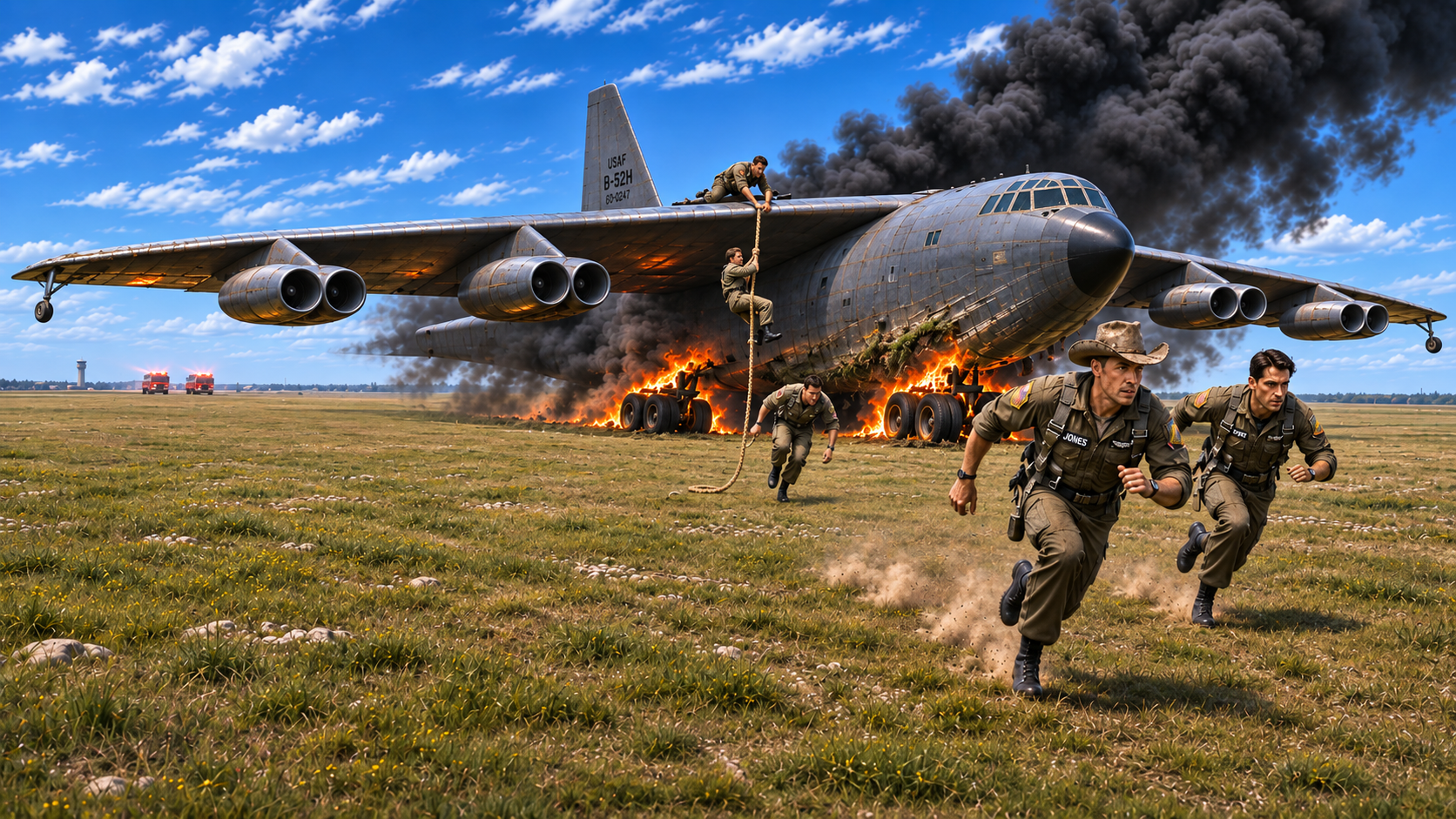
    The pilots unbuckle and climb toward an overhead escape hatch. Ed is already out of his harness, waiting for a clear path aft. Behind him, the electronic warfare officer opens a second overhead hatch and climbs out, followed by the navigator. Ed is the last onto the fuselage. They descend from the wing using an escape rope.

    The landing gear is engulfed in flames. Thick black smoke rolls from beneath the bomber, and flames lick at the wings full of fuel. As soon as they hit the ground, they run.

    Beside the runway is a row of low, grass-covered mounds. From the air they look nearly flat, but up close they’re substantial structures, twenty feet high and sixty feet long, with heavy steel doors set into concrete at one end. They’re ammunition bunkers, called igloos.

    Everybody heads for the nearest one. Although last out of the cockpit, Ed catches up and passes the others as they sprint for the far side; he ran track in high school. By the time they reach cover, fire trucks have arrived. The crews approach warily, keeping their distance from the burning wheels. Ed knows why. An exploding aircraft tire can send metal fragments flying hundreds of feet.

    But there’s something else aboard the bomber that worries him more. The bombs.

    In 1961, a B-52 broke apart in midair – its tail just snapped off, dropping two hydrogen bombs near Goldsboro, North Carolina. One parachuted down while the other buried itself deep in the ground. A single safety switch prevented one of the weapons from detonating. Much of both bombs were recovered, but a component of the second remains buried to this day.

    Ed knows enough about nuclear weapons from his training, and understands a nuclear explosion requires a precise sequence of events. You can’t simply set one on fire and expect a mushroom cloud. The conventional explosives inside the bombs, on the other hand, are another matter. Those can explode in a fire and scatter radioactive material.

    The tail gunner has made it out, and eventually everyone is hunkered behind the igloo. They’re probably safe if the fuel ignites, but if the nuclear weapons somehow detonate, they can’t run far enough.

    The fire crews gradually succeed in cooling the landing gear. The tar-thick smoke of burning rubber begins to thin. The men lie against the embankment, catching their breath. Nobody has much to say.

    Ed looks over at Jones. The cowboy hat is gone.

    Now, all these years later, Ed stands on a freezing flightline in Anchorage, Alaska, looking at this same asshole. He tells the line chief, a master sergeant, that the aircraft is ready and the rest of his crew is available, but he will not fly with Jones.

    The line chief stares at him.

    “What do you mean, you won’t fly with him?”

    “I’m not getting on any plane with him in control.”

    “You’re under orders.”

    “I know.”

    “You don’t get to decide who flies the airplane.”

    Ed looks toward the cockpit where Jones is taking his seat. “That man nearly killed me once, I’m not giving him another chance. I don’t trust that clown to fly a kite.”

    The line chief isn’t interested in complications. The aircraft has a schedule, and the Air Force devotes considerable manpower and money to keep it. It certainly isn’t going to hold up a flight because a crew chief – the plane’s mechanic, doesn’t like the pilot.

    “Look, Rich,” he says, “I don’t want to see you get in any trouble. Take this hop. We’ll make sure you never see him again – at least around here. But if it comes down to me giving you a direct order and you refuse it, then you’re in a world of hurt.”

    They stand near a red line painted on the pavement, marking a restricted area around the aircraft. The line chief is losing patience.

    “Richardson, you’re getting on that airplane.”

    “No, Sergeant. I’m not.”

    Ed has spent his entire working life in the Air Force, since he was eighteen years old. He understands orders, rank, and what happens to a lowly six-striper who disobeys a superior. He also knows firsthand what it’s like hurtling toward death because a pilot hasn’t listened.

    The sergeant points toward the red line.

    “You step across that line and it’s straight to the stockade. No turning back.”

    Ed looks at it. He’s never had to refuse an order before, but there’s a first time for everything, he thinks. They stand there shivering in the dark. It’s bitterly cold. Anchorage cold. The sort of cold that makes the air itself freeze.

    He has seen this phenomenon only once before. When the temperature drops far enough in very still air, fog can crystallize and form lily-pad-sized “flakes,” fog flakes. He can see them forming now.

    The sergeant is still talking. Ed will be written up. There will be charges. He’ll lose stripes. He could face a court-martial. Ed watches the patches of ice crystals floating over the flightline.

    The radio crackles.

    “Maintenance Control to all units. Weather hold in effect. All departures suspended until further notice.”

    The sergeant stops talking. For a moment, neither says anything. Ed looks toward the airplane, then back at the red line.

    “You’re one lucky son of a bitch, Richardson.”

    “Yes, Sergeant.”

  • We May Be Running Out of People, Or Maybe Just Running Out of Growth

    We May Be Running Out of People, Or Maybe Just Running Out of Growth

    It all started with Syracuse University.

    I came across an article stating Syracuse had a problem: fewer students were showing up. The university missed its enrollment target, faces a budget deficit, and has already pruned academic programs.

    The first suspects I imagined included soaring tuition putting college financially out of reach, young people questioning whether a degree is worth it, and a new biggie: international students having a new – ahem, Administrative – reason to reconsider America.

    All plausible. But then I ran into another factor with the data to back it up: there are simply fewer eighteen-year-olds. Demographers have been watching this particular train coming for years.

    Where have I been?

    American high-school graduates peaked at 3.9 million in 2025, and are projected to decline about 13 percent by 2041. The reason is straightforward: birth rates fell after the Great Recession began in 2008, resulting in a smaller generation now reaching college age. So, some of those missing Syracuse students are not just choosing another school – God forbid, Pittsburgh. No, they were simply never in the pipeline.

    And that’s where the question changed. Syracuse wasn’t really the story. It was just where the larger one first popped up on my radar. Demography moves slowly enough that you can see it coming long off. Yet institutions are still surprised when it arrives.

    Japan has been living through its version for decades, and I feared this turn could get grim. Japan has the world’s oldest population for a major country, around 30%. Next up, tiny Monaco, where a whopping 36% of the population qualify for a senior-discount. 

    But back to Japan. Its workforce has been shrinking over decades, and employers struggle to find workers. Hundreds of schools close every year – really, hundreds. And every year for 30 years, not just recently. Rural towns are emptying out. They even have a word for all the vacant houses: akiya. There it was, I thought. The cautionary tale. Have babies or become Japan.

    Except Japan doesn’t behave like a cautionary tale. It remains rich, orderly and technologically sophisticated. The population is not roaming graffiti-strewn Tokyo neighborhoods fighting over scarce stir-fry.

    The country has been adapting. More women work. More older people work. Companies automate what they can. They use a lot of vending machines. And despite historically restrictive immigration policies, the country has quietly opened some jobs to foreign workers. 

    Meanwhile, communities confront the uncomfortable decisions about which schools, hospitals and train stops still make sense when fewer people are around to use them. This sounds more like an empty-nester renovation than social collapse. Downsizing. And that’s when I started wondering whether I had the problem backwards.

    We talk about falling birthrates as though people are going the way of the dodo bird. They aren’t. There are more than eight billion of us. What is disappearing, in countries like Japan, South Korea and much of Europe, is something more specific: constant population growth.

    And that’s a different issue. All our institutions really, were built assuming another, larger generation would always be coming behind us. So universities built acres of dormitories and companies counted on expanding markets and labor forces.

    Governments established retirement programs that make perfect sense with an incrementally larger workforce each year. Demographically, it looks an awful lot like a pyramid. You know, scheme.

    But now the pyramid is turning into a column. And “suddenly,” Syracuse has too many open seats. But don’t defrost those eggs just yet. The United States is not Japan. We have one major difference: immigration.

    The Congressional Budget Office projects that American deaths will begin exceeding births in 2030. 2030? It’s not too early to plan a 2030 summer vacation. But without immigration, that’s when the U.S. population begins shrinking, while I’m maybe on a cruise. With immigration, the CBO projects continued growth until about 2056.

    Whatever anyone thinks the “proper” level of immigration should be, American immigrants are hardly just additional mouths to feed in an already crowded country. The majority tend to be younger, driven, working-age people entering a country that is getting older and producing fewer workers of its own.

    Which brings us back to babies. Governments have tried all sorts of things to persuade people to have more of them. Checks. Tax breaks. Childcare subsidies. Parental leave. Campaigns selling the joys of family life. Some of the policies make raising children less punishing – worthwhile on its own. But there’s an inconvenient snag in the grand national baby plans. They can’t solve any immediate labor problems.

    A child born this morning will not solve next year’s nursing shortage. For a while, that child actually creates more work and consumes more resources. The replacement employee we’re after starts applying for jobs around 2045. Will I even be alive then? That was the point where my original question – How to fix the falling birthrate? – stopped seeming quite right.

    Maybe a more useful question is: Can we adapt our society to not require an ever-larger next generation to keep the machinery running? Maybe we need to rethink the very concept of growth as the ideal. They tell us the iron rule of business is: companies that don’t grow, die. 

    But if an economy can no longer count on an expanding population of workers and consumers, how do we measure progress? What does a successful economy look like when getting bigger is no longer attainable? It may mean reconsidering what an economy is for in the first place, what it should do for us.

    The machinery’s purpose should serve the people living in it. For generations, we’ve treated extracting more, producing more, selling more and throwing more away as evidence that the system is working. The result is monopolized corporate control of labor, extracting and hoarding vast wealth. For the majority though, the people making the machine work, their buying-power has hardly changed in 50 years. And on a crowded, warming planet, we’re discovering some other serious design flaws.

    A tack could be organizing our economy around sustainability, durability, reuse, public well-being and getting greater value from fewer resources. A richer life doesn’t require an ever-growing pile of stuff and trash. Success can be measured in other ways than corporate profit.

    Of course, fewer workers supporting more retirees is a real financial problem. Nursing homes need staff and pensions need funding. That doesn’t disappear when we decide growth is overrated. But consider the peculiar bargain behind much of the national anxiety over declining birthrates: have more children today so tomorrow’s institutions can continue operating much as they always have. 

    See what that got us.

    I went looking for a baby shortage and found modern society built on a faltering pyramid scheme, now aware the next pool of marks is running dry.

  • Mountain Valley Pipeline: A New Fuel, an Old Habit

    Mountain Valley Pipeline: A New Fuel, an Old Habit

    So let’s bang on the Mountain Valley Pipeline drum again, shall we?

    I started following this project a few years ago, when West Virginia Senator Joe Manchin was holding up much of his own party’s legislative agenda to push a 300-mile natural gas pipeline through the Appalachian Mountains. The pipeline was unfinished, environmental groups were fighting it in court, and Manchin effectively turned his one Senate vote into a bargaining chip.

    He got his pipeline.

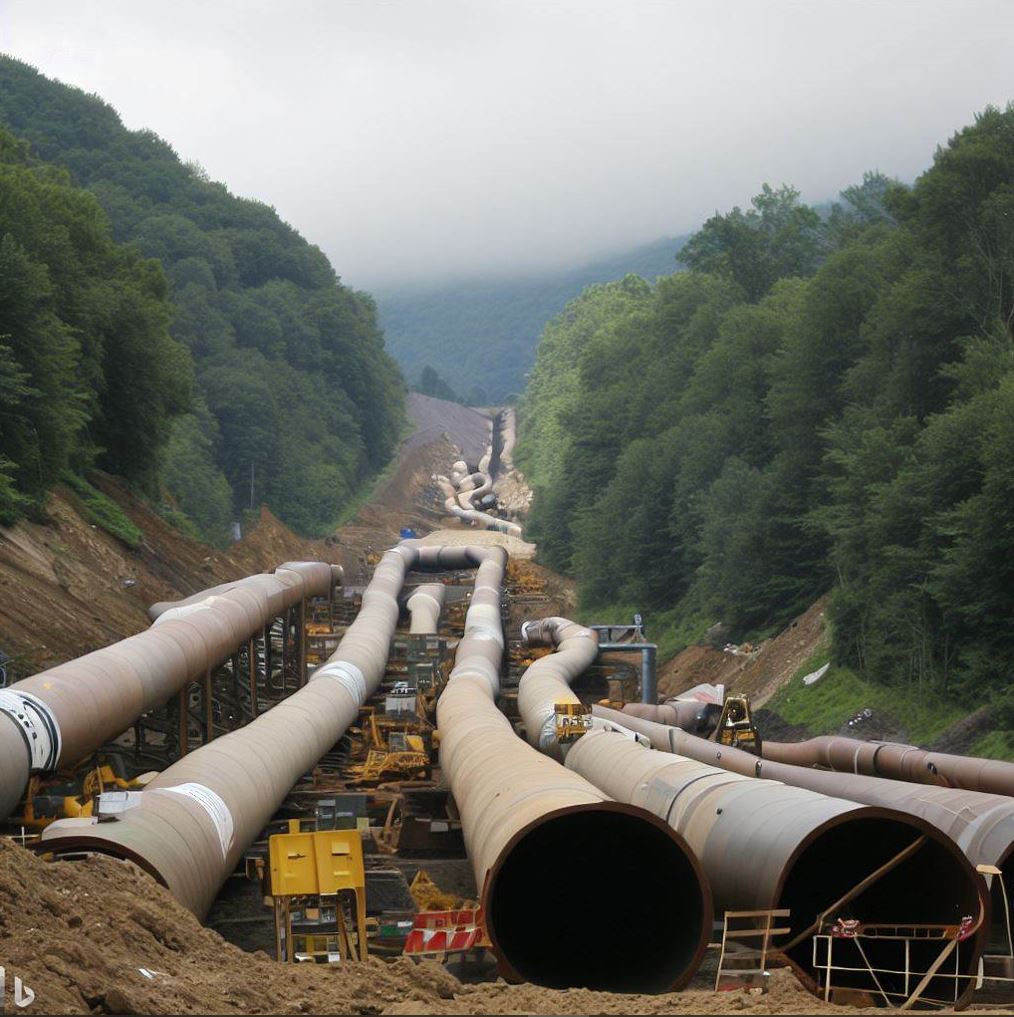
    The Mountain Valley Pipeline (MVP) began operating in June 2024, carrying shale gas from West Virginia into southern Virginia. Its estimated cost ballooned to nearly $8 billion, more than twice the original projection. Construction was repeatedly interrupted by legal challenges, frequently involving defective federal permits.

    Congress came to the rescue in 2023, inserting a provision into the federal debt-ceiling agreement that Manchin would not approve of otherwise. The deal largely shielded the project from further judicial review.

    When the courts become inconvenient, there’s always another way around them.

    And the story continues. A separate 31-mile extension, called MVP Southgate, is now under construction to carry gas into North Carolina. It is scheduled to begin operating in 2028, and Duke Energy has committed to purchasing transportation capacity.

    Why does this matter? Because the pipeline represents something much larger than a means of moving natural gas around. It is another example of extending the economic life of fossil fuels at precisely the moment we should be moving beyond them.

    Consider West Virginia.

    The state has a long relationship with coal, a resource that generated 87 percent of its electricity in 2025. Coal built its economy, employed generations of workers, and created enormous wealth. Unfortunately, most of the wealth flowed to the top, leaving many mining communities poor and vulnerable to the booms and busts of extractive industries.

    Coal’s economic prospects have deteriorated to new lows. Aging power plants are more expensive to maintain while cleaner alternatives have been competitive for years. Utilities have been retiring coal-burning generators for years and replacing them with renewables, like 95% of new builds. It’s just smarter financially. There are occasional political attempts to revive the coal industry, but political enthusiasm doesn’t make an old power plant young again.

    Fortunately, from the perspective of the extraction industry, West Virginia happens to be sitting atop another valuable resource: shale gas.

    And there we have it. A new fuel, conveniently located under the old economic model.

    Natural gas does offer some genuine advantages over coal. Modern gas-fired power plants emit roughly 60 percent less carbon dioxide per kilowatt-hour and far fewer other pollutants associated with coal combustion, such as mercury and sulfur dioxide. Closing coal plants also reduces the problem of coal ash, an unpleasant cocktail of contaminants left behind after combustion.

    These are real improvements. But natural gas is still a fossil fuel. Worse, its principal component, methane, leaks a lot during production and transportation, eroding the climate benefits of replacing coal with gas. Even without leakage, burning natural gas still produces enormous quantities of carbon dioxide. In 2025, natural gas accounted for more than a third of all U.S. energy-related CO₂ emissions. So replacing coal with gas amounts to a partial improvement, with a potentially very long expiration date.

    That brings us to North Carolina, where Duke Energy is pursuing precisely this transition.

    At its Roxboro generating station in Person County, Duke is constructing two new natural gas combined-cycle units, each with approximately 1,360 megawatts of generating capacity. They are intended to replace the site’s coal-fired generators.

    The language used on such projects makes it sound like a simple conversion, as though a utility techn ceremoniously turns a large dial on the wall from COAL to GAS.

    What really happens is Duke tears down the old plant and builds new generating facilities. This is an enormous investment of equipment and supporting infrastructure, and it’s designed to operate for decades to recoup the investment and then some.

    And that’s the part that troubles me.

    A new gas plant may produce electricity more cleanly than the coal plant it replaced. But building one today commits ratepayers to another generation of fossil-fuel infrastructure, and emissions, even as cleaner technologies are proving to be the more practical move.

    The economics are looking grim for fossil fuels. The International Renewable Energy Agency reports that more than 90 percent of utility-scale renewable projects commissioned worldwide in 2025 produced electricity more cheaply than the least expensive new fossil-fuel alternative in their respective markets.

    In California, batteries charged with solar power are already displacing natural gas generation during evening peaks.

    Duke argues that natural gas is needed to provide reliability as electricity demand grows. But the idea of reliability should prompt a rigorous comparison of alternatives, including costs over decades and exposure to fuel-price volatility. Sunshine, at least, will never deliver a fuel-price shock.

    The availability of a new gas pipeline should not, by itself, determine which power plants get built, especially when pipeline operators and gas producers have their own long-term financial interests in keeping that fuel flowing.

    There’s another issue here, one that has bothered me since I first began examining the project.

    West Virginia’s dependence on resource extraction has left its working communities exposed to the fortunes of industries they cannot control. The state has valuable natural resources, capable workers, and considerable potential for new industries. What it needs is a diversified economy that can prosper without the fluctuations of a single commodity.

    That means investing in education, infrastructure, manufacturing, technology, and industries with a future beyond the next deposit underground. Instead, the Mountain Valley Pipeline demonstrates a familiar proposition: extract another resource, build the infrastructure to sell it, and collect the proceeds for as long as the market and the public allow.

    Joe Manchin argued that the pipeline was in the national interest. You could argue Congress ultimately agreed after months of bitter stonewalling.

    And that may be the most revealing part of the story. A political agreement can declare a pipeline necessary, approve its construction, and remove legal obstacles. But it cannot make the underlying business model sustainable.

    We are still spending billions extending the infrastructure of an industry whose decline is central to addressing climate change, even as cleaner, cheaper technologies make burning stuff for power look like an expensive, dirty habit.

    West Virginia has been down this road before. Different fuel. Same dependency,

  • First We Heat the Planet,  Then We Dim the Sun

    First We Heat the Planet, Then We Dim the Sun

    Global warming is not a mysterious process. We burn coal, oil and gas, and the carbon dioxide accumulates in the atmosphere, warming the planet. There are complications, obviously—methane, feedback loops, ocean circulation—all that, but the basic mechanism has been understood for a long time. If we want to stop making the planet hotter, we have to stop putting so much carbon dioxide into the atmosphere.

    But what if we don’t do that and instead dim the sun?

    The idea is solar geoengineering, or solar radiation modification. One way to do it is to release reflective particles high into the atmosphere, where they float around while bouncing a fraction of sunlight back into space. Nature has demonstrated the basic concept. Large volcanic eruptions can temporarily cool the planet and contributed to cooler periods during the Little Ice Age. The geoengineering version is, roughly speaking, a volcano, but mechanical and scheduled.

    There is something irksomely human about this. We discover that burning fossil fuels is changing the atmosphere and harming us, so we spend decades arguing about whether we should stop doing it, eventually arriving at the possibility of changing the atmosphere in another way to compensate for the first change. This is why people have junk drawers.

    And the sun-dimming idea isn’t exactly science fiction. Researchers are studying it right now because climate change is showing its teeth, and solar geoengineering could become the “nuclear option,” capable of quickly lowering temperatures should the planet heat even faster than predicted.

    That is where the idea gets really uncomfortable, because it’s almost certain to work in one narrow sense: cooling the planet. But would do nothing about the carbon dioxide causing the warming. It would also not stop ocean acidification, and is likely to create new risks by altering regional rainfall patterns with droughts and floods.

    That brought me to a term: mitigation deterrence. The idea is that if we believe a future technology might rescue us from the consequences of today’s pollution, it weakens the pressure to stop polluting today.

    Why shut down the coal plant if someone can simply pull the carbon back out of the atmosphere later? Why moth-ball oil and gas infrastructure if future machines can clean up the mess? And eventually, why endure the political fight of eliminating fossil-fuel emissions if we can cool the planet by reflecting a little sunlight?

    At first this smacked of just another version of moral hazard. Give somebody insurance and they’re incentivized to be less careful. But that does not quite capture the worst part.

    Imagine there is a hole in the roof. Fixing it would cost $500. But nobody wants to spend $500, so they put a bucket under the leak. Eventually, the ceiling rots, water gets into the wall, mold develops, yada, yada. At that point the only practical solution is a $40,000 renovation.

    They did not simply uncover a $40,000 problem. They built one.

    That is what I keep coming back to when I read about geoengineering. For decades, reducing greenhouse-gas emissions has been treated as too politically difficult, too expensive or too disruptive. Fossil-fuel infrastructure kept being built. Cars got even bigger. More people flew as flights got cheaper. Governments promised future emissions reductions while carbon dioxide continued accumulating.

    1990 emissions: 22.5 Gt.

    2025 emmissions: 38.1 Gt

    Meanwhile, every year of delay made the original problem bigger and harder to solve.

    Now another option enters the conversation. Maybe we can alter the sky.

    There does not need to be a secret meeting where oil executives decide: first we cook the planet, then we sell everyone a planetary thermostat. The incentives do the work without any one person or group planning the whole thing.

    An oil company wants another profitable decade of production. A politician wants gas prices low through the next election. A homeowner doesn’t want to replace the wasteful furnace yet. A government promises net zero in 2050, a convenient year because almost everyone making the promise will by then have another job or be dead.

    Each decision can be defended individually. But collect enough of them and something changes. Yesterday’s extreme solution becomes today’s research program and tomorrow’s emergency measure.

    That is the part I find most chilling. Odd are good that someday solar geoengineering really will become necessary. With millions of lives at risk from continued warming, rejecting a useful technology simply out of fear of unintended consequences could be its own kind of foolishness.

    But consider how we might arrive at that point. After decades of rejecting less radical solutions as too expensive or disruptive, we could find ourselves contemplating an extraordinary intervention as the only practical choice.

    I think there’s a useful phrase for this:

    Manufactured inevitability.

    Keep narrowing the choices long enough, and eventually you can truthfully say there are no alternatives left.

  • The Diner

    The Diner

    A short story by Doug Richardson


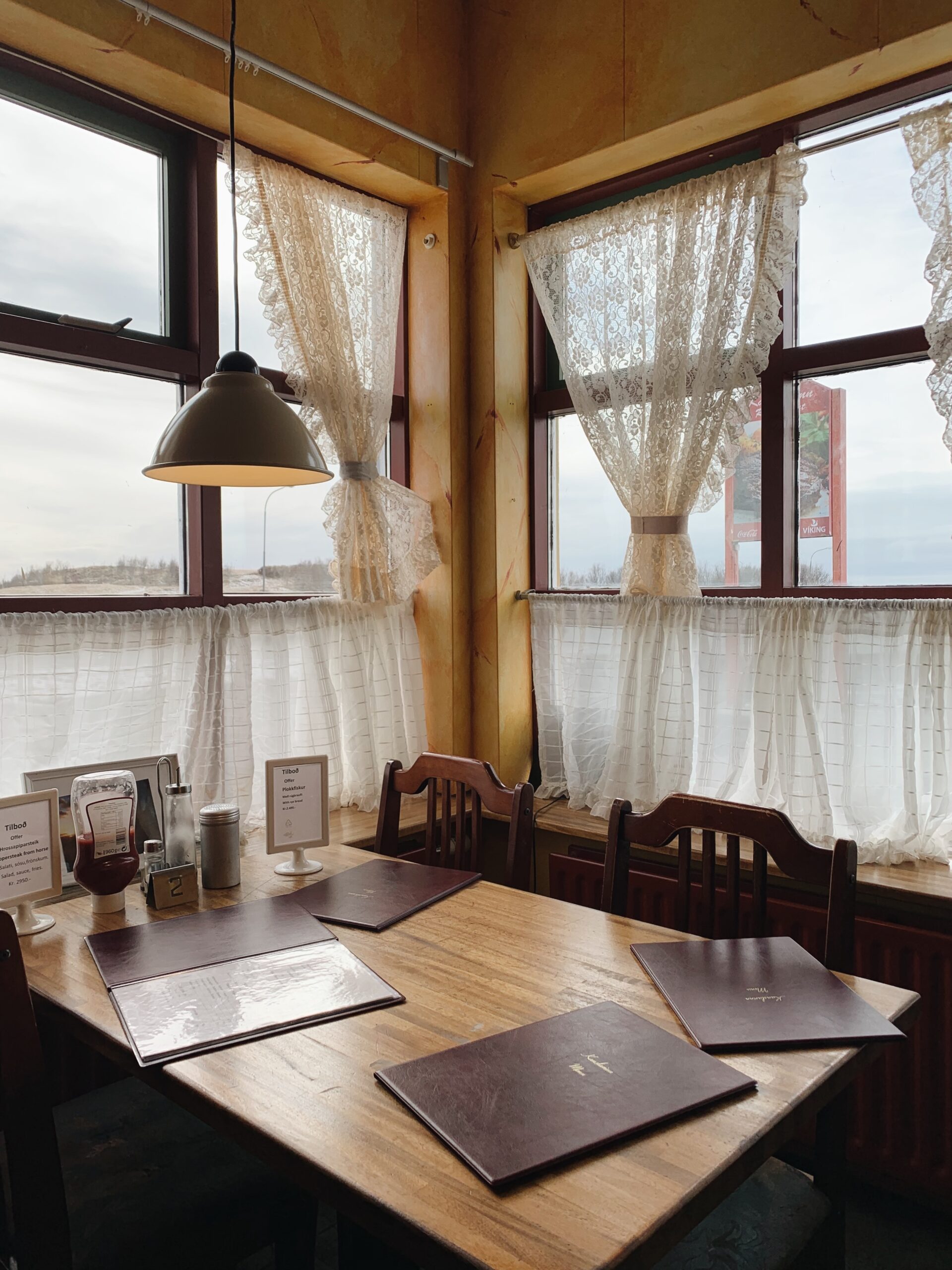
    The new girl started work last Monday. The diner has been short-staffed since Barbara left; she said 23 years is long enough. The new girl, Rachael, looked like she wasn’t from around here, had more of a city look, like the girls who grow up on the outskirts, on farms, and start out early dressing the part of getting to a city where all the possibilities are. So it seems she was lost.

    All the regulars had the same alarmed look when they first spotted her, someone different behind the counter. It was a reaction as though returning home and finding a new chair in a corner. It fits in the space and looks normal, but it’s so new that the lizard brain sends a brief alert that it might be a bear. 

    Most of the regulars have been around since the old days of the mill. They would meet in the morning on their way to work, and got to know each other that way. Most rarely ran into each other in the acres upon acres of the mill compound. And Greg was the only office worker. Everyone else worked out in the weather and with the machines. But Greg was a pleasant enough guy. He didn’t put on airs, and the scruffier guys slowly let him into their group. Now, over twenty years after the mill fully closed, they meet just as early in the morning, but then spend a couple hours nursing 75 cent coffees with the local TV news droning in the background.

    Counter help couldn’t have come soon enough. Flanders said at least three times that “Service is as slow as two dead snails.” It made him chuckle to himself every time. But he’d reached his limit. He and everyone else knew you only got to use a good zinger like that three times at most. Any more and it just got annoying, like someone trying too hard to coin a catchphrase.

    The diner had been a center of stability with Barbara running things. Frank, the owner, thought he ran things, but really it was Barbara. She taught every cook that blew in how to put out consistent food, and there have been more than a few cooks over two decades. Most didn’t stay longer than three or four years before moving on, and up. With the diner training under their belt they generally found it easy to get work for more pay in cities – or at least bigger towns that had more to do and more romantic possibilities.

    And the same with waitress help. There have been some long runs where a girl hires-on part time in high school and then stays a few years after graduation. The job is always a way station for the cooks and waitresses, but not for Barbara. She didn’t yearn for the city, for excitement, for the unknown. For her, that seemed like taking a big risky chance with your life, like making a 50/50 bet as the dice tumbled to the other end of the table. You could lose.

    She was terrified of losing. She wasn’t afraid of much else, but after marrying right out of high school, she and her husband, Alan, were frugal, a bit lucky, and saved up enough to buy a house a few years after graduation. She was quietly proud of this achievement, and that house was the rock of Barbara’s life. She would no sooner leave her house to try life in a new town than leave one of her children on the highway. 

    Back then Alan had a good paying position at the mill, while Barbara stayed home raising their family and building their home, one garage-sale find at a time. Soon, years passed and dust accumulated in corners that never get fully cleaned out, and you just get used to it. Barbara knew exactly what to expect for the next day. She was happy, and flourished.

    But the winning streak ran its course. Alan saw the writing on the wall with the layoffs, how with more and bigger machines just as much lumber was processed but with a third the manpower. So he made his move to the office. He started making excuses to get in the door – anything, needing a timecard, or dropping off paperwork. After a while he got to know Carol, the secretary, the shortest person Alan had ever met. She was friendly, and would usually take the time to have a brief conversation about the weather, or ask if he had any luck fishing.

    Eventually the managers got to know him too. Alan had become a familiar face. This was a long game he was playing, and it took nearly a year. He had come in to drop off a Christmas gift to Carol, a desk bowl of assorted candies, when he overheard that a junior manager was leaving. 

    “Say Carol,” Alan asked, “do you know if the office has anyone in mind for that manager position opening up?”

    “Not that I know of,” Carol said.

    “Do you know what the requirements are?”

    “Not much really, just experience. Most of these guys started out in the yard like you. Are you interested?”

    “I might be.”

    “Well, you’ve been around long enough, you know the ropes. Here,” she said, pulling a sheet of paper from a side drawer, “take an application and bring it back. I’ll make sure someone sees it.”

    And it was that easy. That kept them going another ten years. Then the logging slowdown started and there was no other angle to play. The mill compound was a ghost town of its former hey-day, when there were guys in grubby hard hats and big trucks and machines everywhere. It was much more efficient now, but Alan could never get over how eerie it felt with so much space and so few guys running it. And it smacked as rude when near the end everyone had to either accept a pay cut or risk closing the mill, which just forestalled the inevitable closing.

    With their two boys gone to college and only their daughter, Katie, still living at home, the Burns settled into an even quieter life than their already quiet life. For once, there were no boys stomping around slamming doors and breaking things, taking every opportunity to make a loud noise. It took Barbara a week to notice it when her last son, Jason, went to college: the silence. And when she did notice, she had a momentary flash of heart-breaking nostalgia for the incessant, startling racket that had frequently irritated her.

    It was around then that the mill closed for good. Alan did get a small retirement package, but there was no other industry in Spruce as a backup, nowhere else to go. The mill is what gave the town its only jobs that were not service positions in auto shops and grocery stores. The mill is why the town existed at all.

    Barbara did the math and found they were in good shape, considering. Their house was nearly paid off and expenses were low. So she took a part time job at the diner to bring in a little more each month, and the habit stuck. Twenty three years went by as if in a day. There were eras though, like in the early days when that chef started the fire. He stayed on another year – maybe out of guilt, but he let Frank know a month ahead that he would be leaving soon, to give him more time to find a replacement. 

    And there was the time that Barbara considered her best years, when Rayna worked with her. They became instant best friends, and it made the hours at the diner more of a social occasion than work. Sometimes Barbara even looked forward to going to work, taking extra care with her makeup and changing up her look and jewelry so as not to get into too much of a rut or be too predictable.

    But Rayna too would become another in a long string of characters to pass through as Barbara stayed on. Rayna’s ticket out was to marry a truck driver who started stopping by the diner on his route. For two years Earl could usually be found at the same seat in the diner at around the same time, 10:30am, which was sort of a lull hour after the breakfast rush. Earl’s spot was close to the register, which gave him lots of opportunity to chat up Rayna. He lived eighty miles away in Lake County though, so when the couple finally bridged the gap to romantic interest, they had trouble getting together to get to know one another outside of the diner. Rayna would later say they got married so they could date.

    After Rayna there was just one transient after another to help Barbara run the place, rarely someone from town that she knew, and each person painted the place with their personality and vibe, which looking back is as clear as a picture. There were the bright days of Rayna, then that blue stretch when what’s-her-name showed up and really caused a fuss. Rachael is the latest, but it’s clear she won’t last long. She’s no Barbara.


© 2025 drichardson27.com